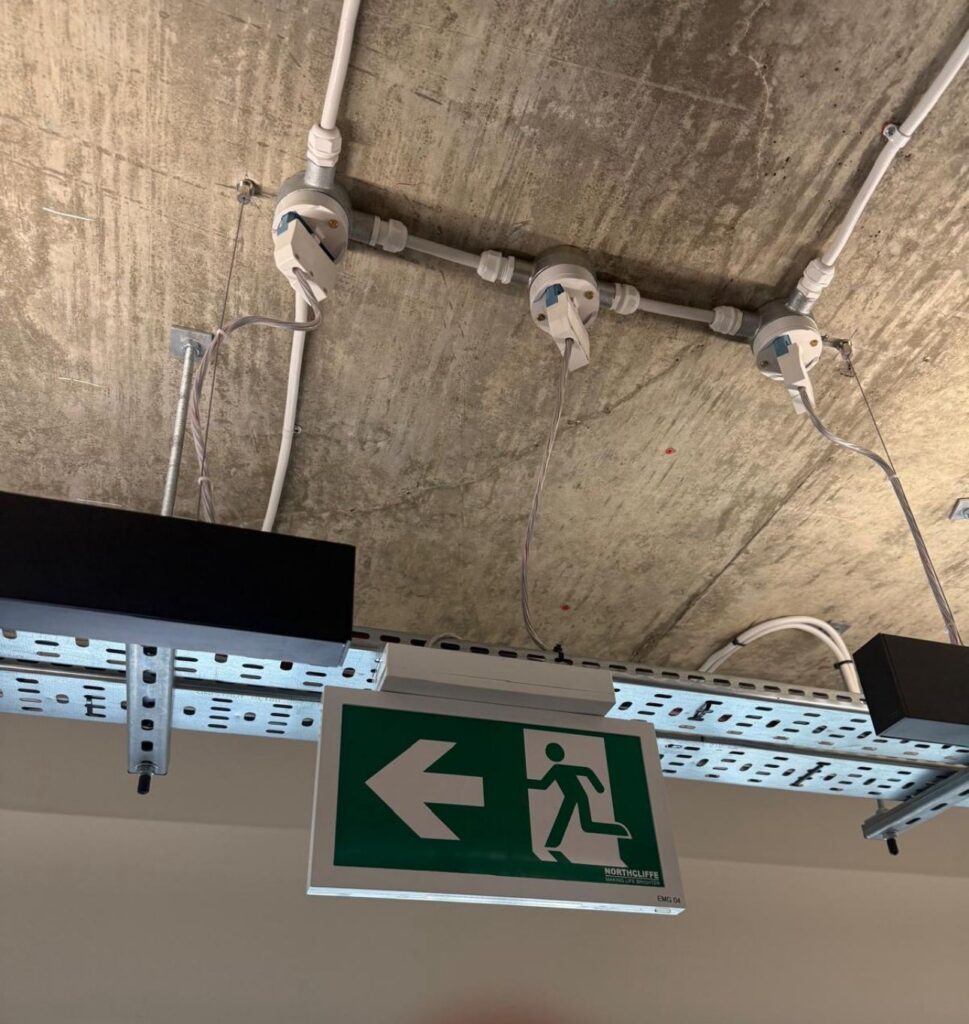
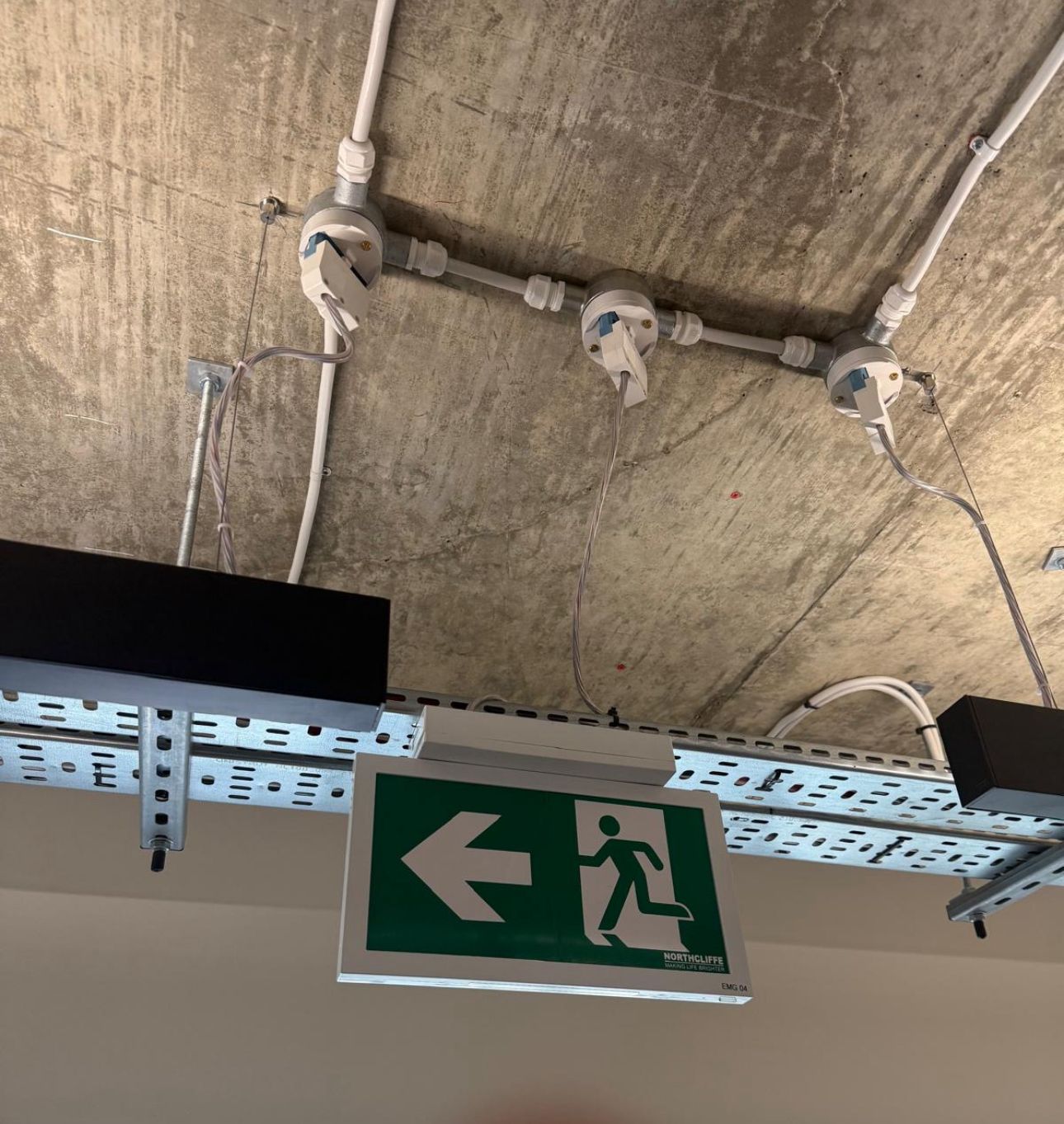
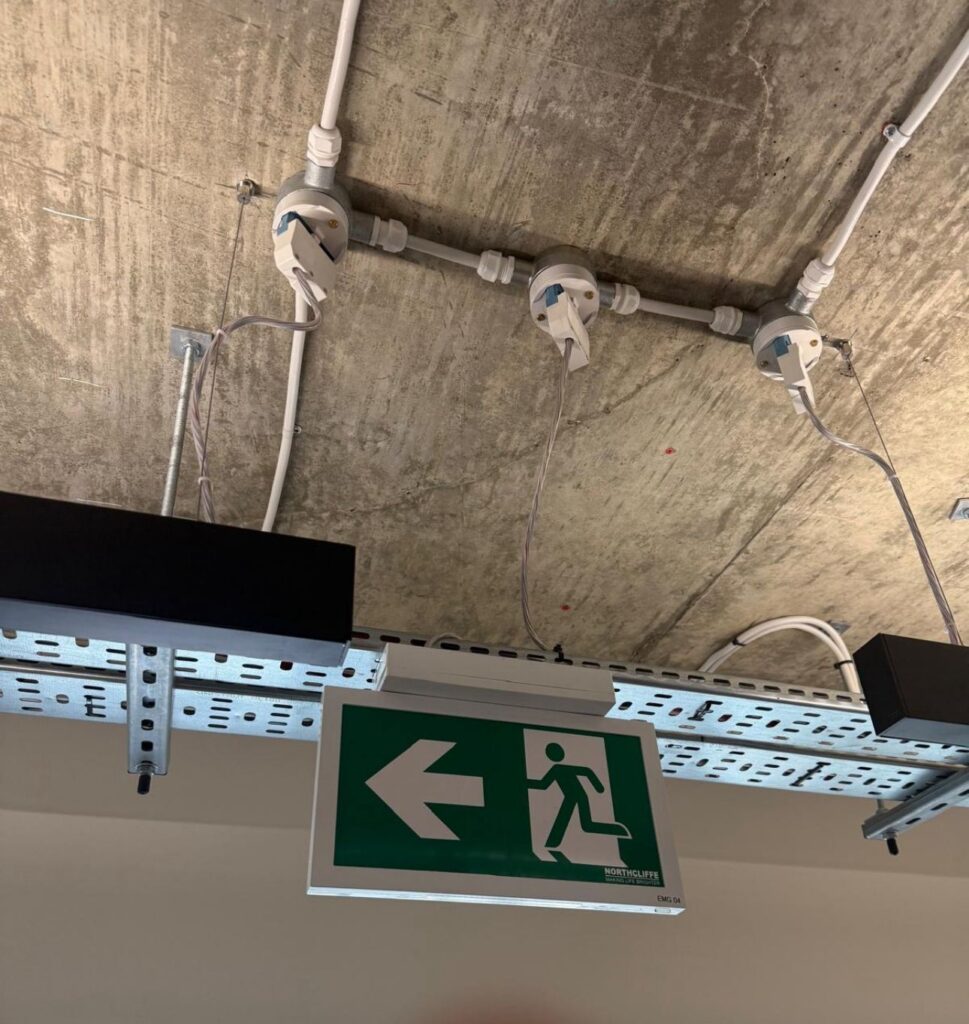
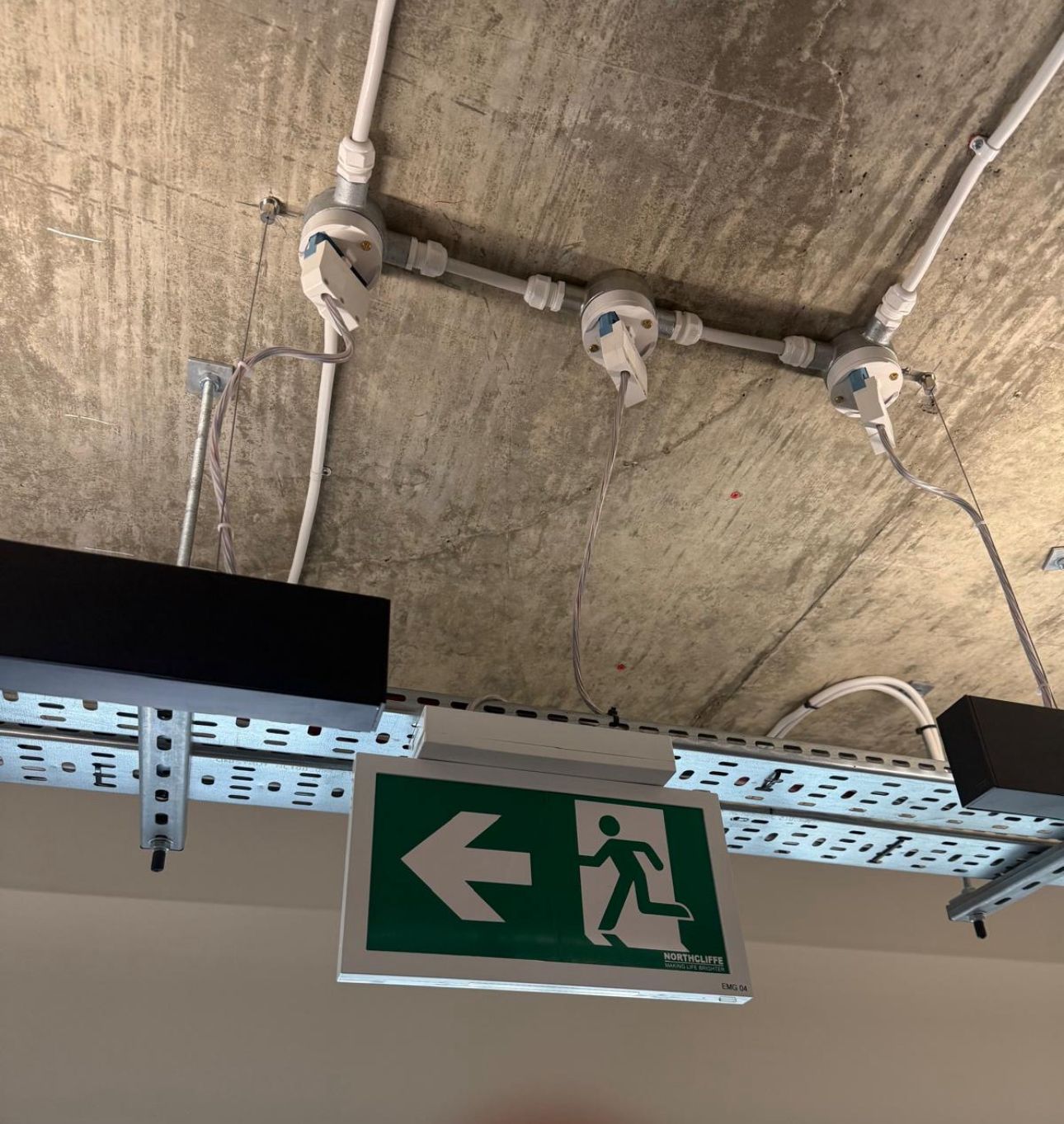
Emergency Lighting Design & Emergency Lighting Compliance

At KPA Electrical, we understand that emergency lighting and well-planned exit strategies are non-negotiable in commercial buildings.

We design, install, and commission every system entirely in house to ensure your premises meet BS 5266 and EN 50172 requirements and keep occupants safe at all times.

Our design and installation process is simple, whilst working closely with consultants, architects and most importantly the clients we develop a fully compliant system by following a simple procedure.

1. Risk Assessment & System Classification

Begin with a detailed fire-risk assessment to identify escape routes, hazard areas, and occupancy types. Determine the appropriate emergency lighting system classification (e.g., maintained, non-maintained, combined) based on BS 5266-1 requirements and the building’s risk profile.

  • Review floor plans, occupancy levels, and escape distances.
  • Identify essential escape routes, open spaces, and high risk zones.
  • Classify system type: maintained (lighting always on), non-maintained (only on fail), or combined.

2. Illumination Requirements & Exit Route Planning

Use BS EN 1838:2024 for performance targets and EN 50172 for system guidelines. Specify minimum illuminance levels (lux) for each area and ensure signage coverage along all escape routes.

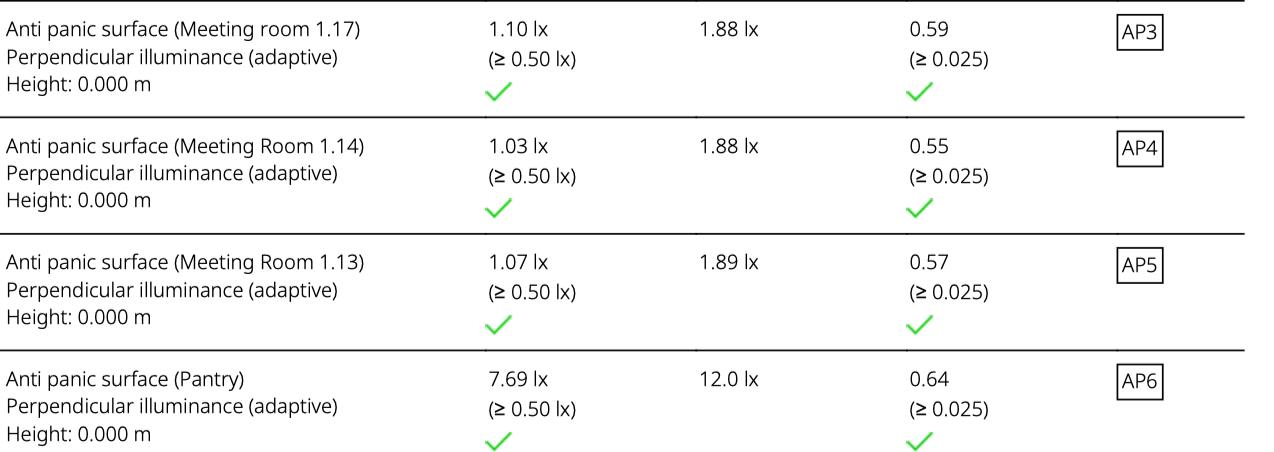
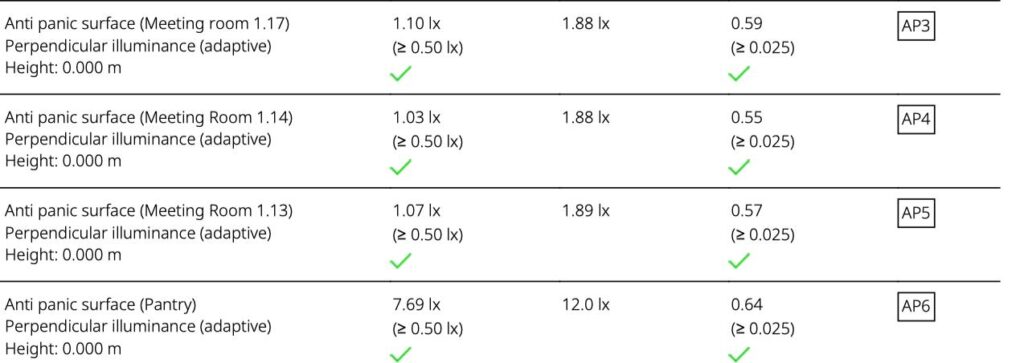
  • Escape routes: ≥ 1 lux along centre line; ≥ 0.5 lux to corridor edges.
  • Open areas (assembly): ≥ 0.5 lux.
  • Final exits and staircases: ≥ 1 lux.
  • Exit signage: visible at minimum 10 m; 50 cd/m² luminance.

3. Layout Design & Documentation

Produce comprehensive CAD drawings and single line schematics showing luminaire positions, circuiting, and exit signage. Include:

  • Plan views with escape path overlays.
  • Circuit diagrams for each lighting zone.
  • Device schedules (type, wattage, autonomy).
  • Control gear and central power supply locations.

Designs must comply with BS 5266-1 section 5 and be coordinated with architectural and structural drawings.

4. Equipment Selection & Specification

Select luminaires, control gear, batteries, and signage that meet performance and durability standards.

  • Emergency luminaires with correct beam angles and photometric data.
  • Central battery systems sized for required autonomy (≥ 3 h typical).
  • Self-contained units where circuits are distributed locally.
  • Self-test or monitored systems for automatic fault reporting.

Specify IP ratings, maintenance access requirements, and manufacturer test certificates.

5.Installation Best Practices

Implement installation practices that preserve system integrity and simplify maintenance.

  • Route all emergency circuits in dedicated conduits or segregated trunking.
  • Label cables and panels clearly with circuit identification.
  • Mount luminaires at recommended heights and angles to achieve design lux levels.
  • Install exit signs at each change of direction and above final exits.


Ensure separation from non-emergency wiring to avoid false triggering and maintain loop continuity.

6. Commissioning & Testing

Carry out a full commissioning sequence, recording results in a test log:

  • Functional test each luminaire and sign: simulate supply failure.
  • Measure illuminance levels at floor and stair landings with a lux meter.
  • Conduct duration test: verify batteries sustain required run-time.
  • Test central supply: measure voltage, charge-rate, and fault-detection functions.
  • Compile commissioning certificates and fault reports as per BS 5266-1 Annex B.


7.Documentation & Handover

Provide the client with a complete fire-safety file including:

  • As-fitted drawings and single-line diagrams.
  • Device schedules and photometric reports.
  • Commissioning certificates, test logs, and maintenance instructions.
  • Emergency lighting logbook template for periodic inspections.
  • Offer training for site staff on system operation and fault-reporting procedures.


8. Maintenance & Periodic Inspection

Establish a maintenance regime under EN 50172 and NSI SP203-1:

  • Monthly visual checks and function tests (self-test logs).
  • Annual full duration and lux measurements by qualified personnel.
  • Replace batteries, lamps, and components as needed.
  • Update logbook and issue inspection certificates.
  • Regular servicing preserves compliance and ensures occupant safety.